


Today’s B2B SaaS and tech marketing teams invest heavily in video content like webinars, explainers, and podcasts to engage self-service buyers, yet many overlook a significant opportunity to extend that reach. Once a video is published, it rarely gets repurposed into written content that can rank or support demand over time. While search engines can index video pages, blog posts are far more effective at capturing long-tail, high-intent queries because you can control copy depth, internal linking, and metadata. This lack of visibility is a fundamental content leverage and SEO problem.
Tools to repurpose video content into blog posts offer the most efficient solution for unlocking this hidden search visibility. By turning video assets into searchable articles, you can reach prospects who prefer reading or those searching for specific technical solutions.
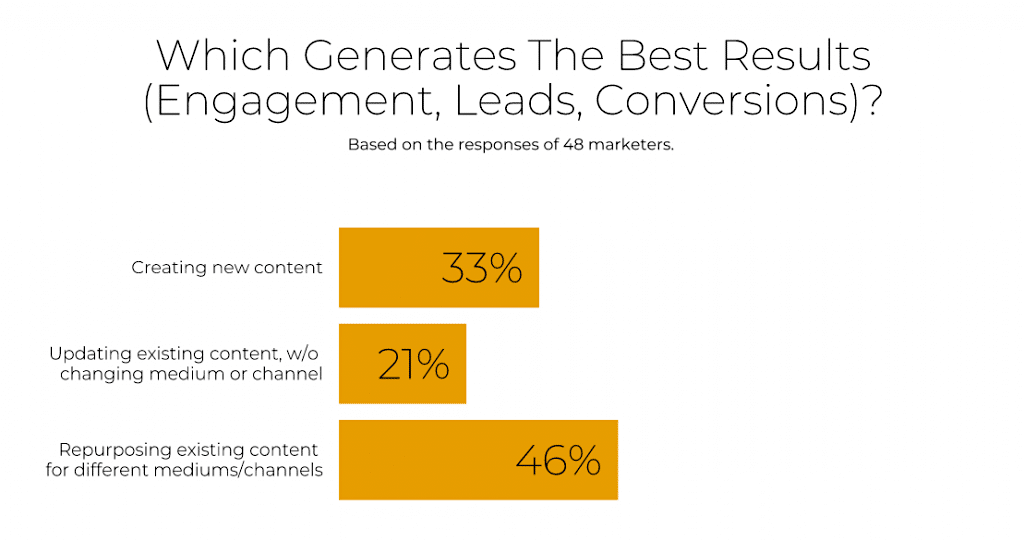
The data backs this move: 46% of marketers report that repurposing content across different mediums yields better results than creating new assets, and 65% find it to be the most cost-effective strategy available. Despite the rise of AI-driven search, organic traffic remains a cornerstone of B2B discovery, and written assets compound value over time by earning links and maintaining search relevance.
But while you already have the content, you may lack the repeatable workflow required to make it searchable and scalable. You can certainly build these processes in-house, but many lean teams choose to engage an agency partner to integrate repurposing into an end-to-end SEO and content strategy. This approach ensures your video production functions as a high-output lead generation engine.
To help you get started, we’ve analyzed the best tools currently available and how they fit into a modern video-to-blog post pipeline.
What are tools to repurpose video content into blog posts?
Tools to repurpose video content into blog posts help transform existing video assets into written, long-form content. They sit within the broader category of content repurposing tools, which focus on reusing one source asset across multiple formats and channels to ensure your message reaches a wider audience.
Essentially, these tools handle the heavy lifting of the editorial process by:
- Converting video or audio into usable text by using speech-to-text technology to create a foundational transcript.
- Structuring and summarizing text to help organize it into logical sections or expand it into a fully fleshed-out blog post.
- Optimizing for the reader and search engines by supporting adjustments for readability, SEO (search engine optimization), GEO (generative engine optimization), and specific buyer-intent queries.
The Importance of B2B Content Repurposing
The value of using these content repurposing solutions lies in their ability to stop the “one-and-done” content cycle. By utilizing specialized tools to repurpose video content into blog posts, you extend the lifespan and reach of your existing content and ensure it doesn’t just disappear after the initial broadcast.
They help you turn video assets into compounding content that lives on your site and draws in traffic and leads for months or years. These tools also maximize the value of the hard work your team has already completed, and provide a cost-effective way to create more content on more channels.
Additionally, the video-to-blog post process extracts unique information gain, which are the expert insights and first-hand data found in your videos that generic AI-written content cannot replicate, and which modern discovery engines now prioritize.
Who are video-to-blog post tools for?
These solutions are best for high-growth environments where content volume and quality must coexist, such as:
- B2B SaaS and tech teams producing regular video content, who can repurpose it to provide technical, written deep-dives that self-service buyers need to build internal consensus before ever reaching out to sales.
- Marketing teams focused on organic growth, demand generation, and maximizing content efficiency.
- Lean teams in startups that need to scale their content output significantly without a proportional increase in production effort or headcount.
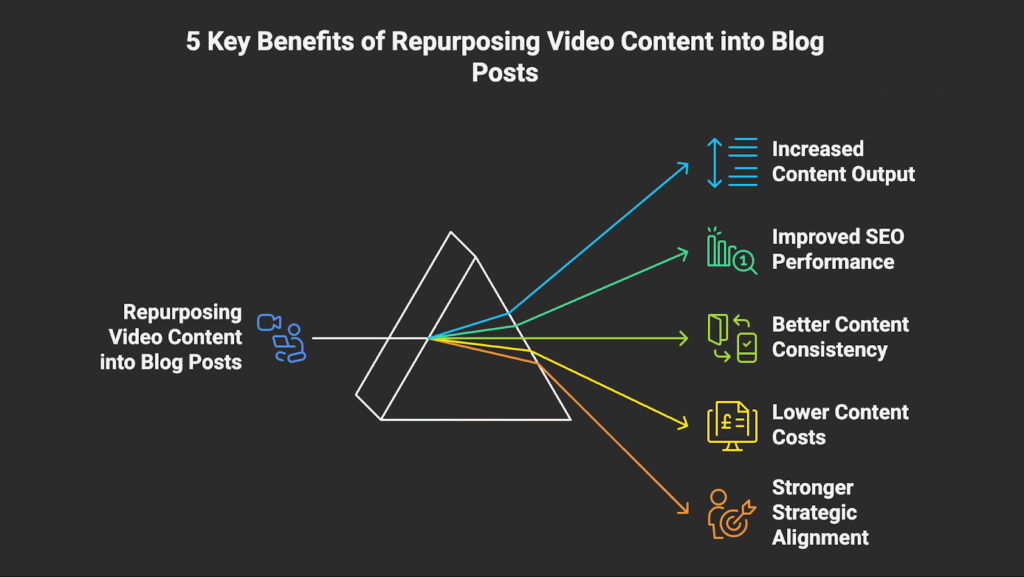
5 Key Benefits of Repurposing Video Content into Blog Posts
Utilizing tools to repurpose video content into blog posts offers several strategic advantages for B2B tech brands:
- Increased Content Output – You can significantly scale your publishing volume without increasing your total production time.
- Improved SEO Performance – These tools turn spoken video insights into indexable, written content that search engines can easily crawl and use to improve SEO ranking for long-tail, high-intent queries.
- Better Content Consistency – Using a single video as a “source of truth” ensures your messaging remains aligned across both your video channels and your blog.
- Lower Content Costs – You reduce the financial reliance on creating net-new assets by extracting more value from the work you have already funded.
- Stronger Strategic Alignment – This process creates a tighter bond between your video production, your blog, and your broader content marketing goals.
How to Repurpose Video Content Into Blog Posts
Repurposing video content can be done with a single tool or by combining multiple solutions. Some tools handle the process end-to-end, while others focus on specific steps, allowing teams to choose a setup based on how much control they want over the output. The ultimate goal is to turn existing video assets into searchable, publishable written content.
3 Types of Tools for Repurposing Video Content Into Blog Posts
To build an effective system, you should understand the three primary categories of tools available:
- Video Repurposing Tools are usually AI-driven solutions that work directly with video content to generate summaries, blog drafts, or structured written outputs.
- Video-to-Text Tools focus on converting video or audio into transcripts or summaries that serve as the foundational starting point for a blog draft. Many solutions support speaker identification, so the blog can correctly attribute quotes to the right experts.
- Text-to-Blog Tools are often AI-powered and are used to turn transcripts or summaries, combined with human guidance, into structured, high-quality blog posts.
A Simple Workflow to Repurpose Video Content Into Blog Posts
Use this simple workflow to transform your video assets into written articles:
- Start with a Source Asset: Select an existing piece of video content produced by your team, such as a webinar, demo, podcast, or social media video.
- Generate the Foundation: Use a video repurposing tool to create a draft directly, or a video-to-text tool to convert the video into a clean transcript or summary.
- Restructure and Summarize Text: If starting from a transcript, use text-to-blog tools to segment and organize the content into a logical blog structure.
- Expand and Optimize: Use text-to-blog tools and human Subject Matter Experts (SMEs) or editors to add the “last 10%” of nuance that a tool can’t catch. Together, they can flesh out the content, refine the brand voice, and optimize the copy for readability and SEO/GEO.
- Publish and Link: Upload the finished post to your blog, and be sure to connect it back to the original video and your broader content strategy.
11 Tools to Repurpose Video Content Into Blog Posts
Here are the top tools to consider for your video-to-blog post workflow, organized by category:
Video Repurposing Tools
1. TubeOnAI
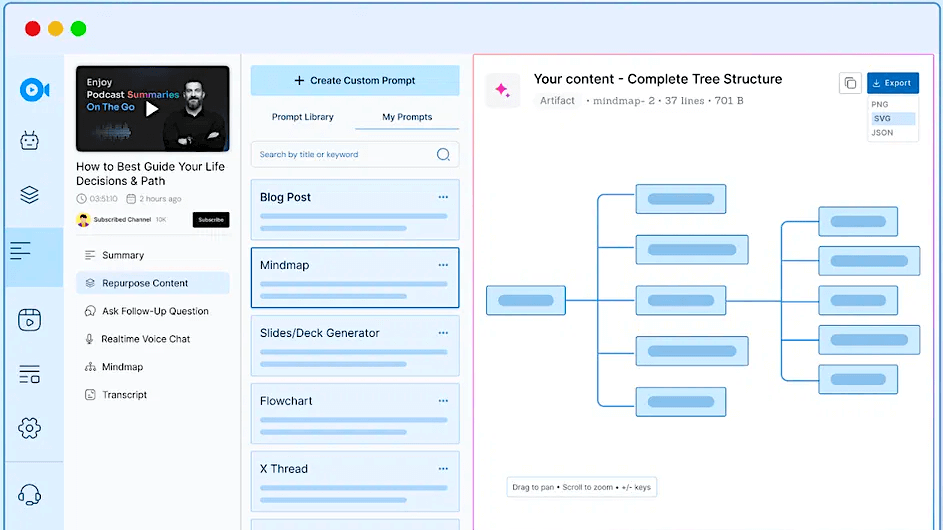
TubeOnAI is an AI-driven summarization and repurposing platform that allows users to transform hours of video into text summaries or full-length blog posts by extracting key insights directly from transcripts. The tool is designed to help professionals create high-quality blogs, social media updates, video scripts, newsletters, and more in minutes.
Main Features:
- Library of over 130 pre-made prompts to instantly generate content from video or audio inputs.
- Flexible interface for users to create and save their own prompts, allowing for precise control over the length, tone, and specific formatting of the output.
- Multi-platform accessibility supports processing content from a wide range of video and audio sources.
Best for: Marketing professionals who need to rapidly convert high volumes of video content into multiple written formats.
Review: “My favorite aspect of TubeOnAI is its ability to quickly summarize long YouTube videos and other online content, saving me a significant amount of time.”
2. Descript
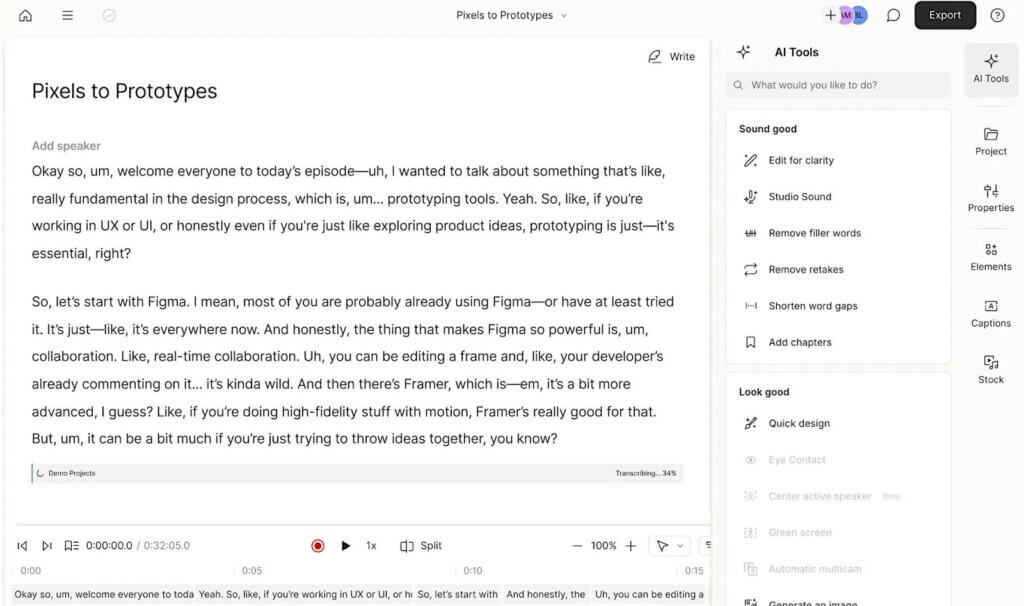
Descript is a robust, “edit-by-text” audio and video editor that has become a staple for B2B teams repurposing webinars and podcasts into written content. By automatically transcribing footage, it allows users to edit video by simply deleting or moving text in the transcript—and simultaneously creates a clean, synchronized script that serves as the basis for blog posts.
Main Features:
- Underlord, an AI co-editor that can instantly summarize recordings, generate blog drafts, and remove filler words like “um” and “uh” to clean up the source text.
- Can translate your transcript into 30+ languages, allowing your content to reach new audiences.
- A handy template for creating blog posts from your content.
Best for: Content marketing teams and podcasters who want a single platform to handle both high-end video editing and rapid text-based content extraction.
Review: “It’s really handy for creating transcripts and LinkedIn posts, and I also use it for generating highlights from podcasts.”
3. Video to Blog
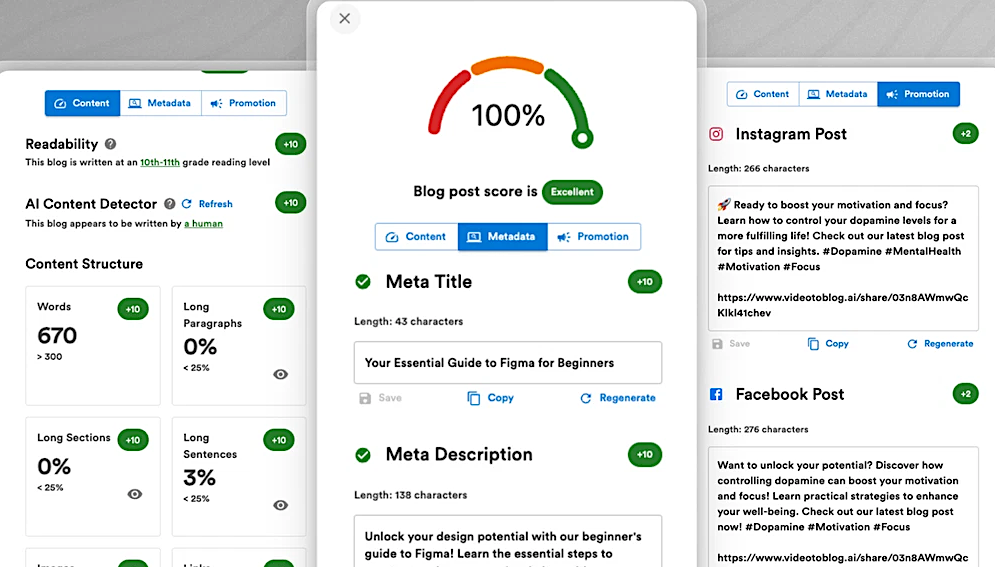
Video to Blog is another AI platform that converts YouTube URLs and video files into SEO-optimized blog articles in seconds. Unlike general transcription features, it boasts context-aware content creation that automatically identifies key narrative points to structure a blog post with relevant headings and bullet points. It can even pull high-quality screenshots directly from the video to use as blog visuals.
Main Features:
- Automatically captures and inserts relevant screenshots from the video source to break up text and provide visual context for the reader.
- Seamless integrations with WordPress and other major CMS platforms, so you can export formatted drafts directly to your website with a single click.
- Includes a real-time content analyzer that scores your post based on SEO eligibility and provides keyword suggestions to improve search rankings.
Best for: Content creators and digital marketing agencies who want an “all-in-one” solution to quickly scale their blog output from an existing YouTube channel.
Review: “The platform’s ability to not just transcribe video but to genuinely understand context and write a high-quality blog post is its biggest strength.”
4. Repurpose.io
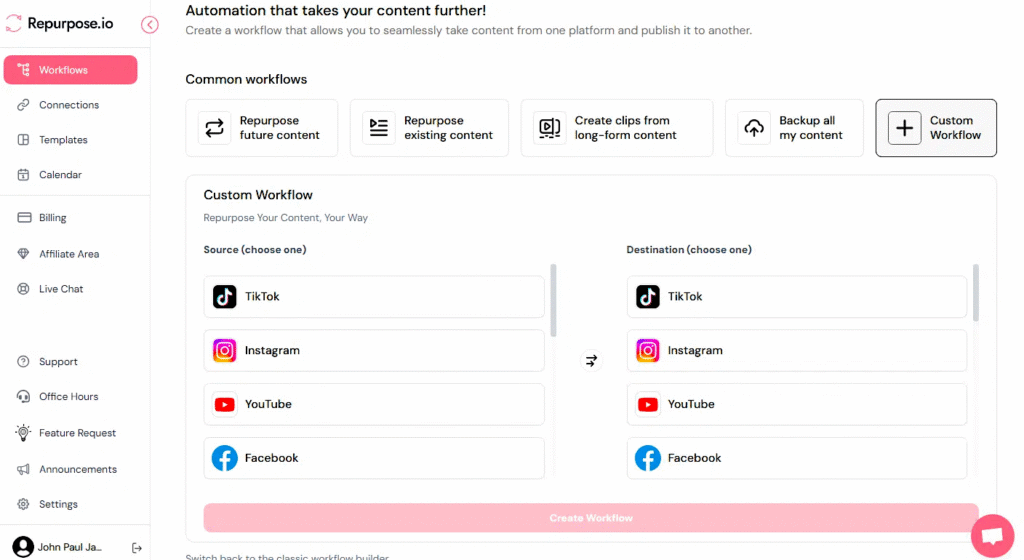
Repurpose.io’s role in a video content-to-blog strategy is centered on creating “micro-blogs” for social platforms like LinkedIn and Facebook, or long-form blogs from YouTube videos with the video embedded. It excels at generating social-ready summaries of your technical content. Primarily an automation and distribution engine, most teams use the platform for broadcasting video content across multiple social channels simultaneously.
Main Features:
- Automatically transcribes audio from your videos into written text.
- Generates social media captions and summaries that are typically capped at 2,200 characters, making them ideal for short-form blog posts on platforms like LinkedIn.
- Options for automated or manual publishing to social platforms.
Best for: Lean marketing teams that prioritize social media distribution and YouTube.
Review: “Not only does it allow me to seamlessly turn one video into over 15 pieces of content, it will then publish the content automatically, saving me and my team hours every week.”
Video-to-Text Tools
5. Streamlabs Podcast Editor (formerly Type Studio)
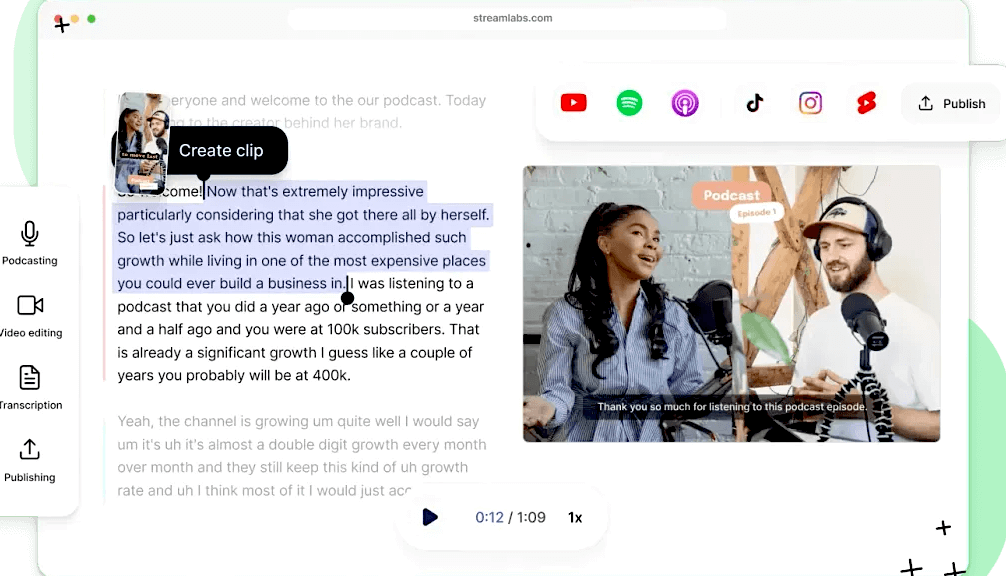
Streamlabs Podcast Editor (formerly known as TypeStudio) is a browser-based, AI-powered video and audio editing tool designed to simplify content creation by treating video like a text document. It includes a high-efficiency video-to-text converter that automates the transformation of video podcast recordings into searchable text assets that form the foundation of SEO-driven blog posts.
Main Features:
- Generates transcripts from video that are exportable as an .srt, .vtt, or .txt file.
- Automatically transcribes and translates your video into 30+ languages to maximize your content’s reach.
- Code snippets that you can copy and paste into your blog CMS to embed your podcast and/or transcript.
Best for: Marketing teams that need to extract content from podcasts and repurpose it into articles or social media posts.
Review: “The Streamlabs Podcast editor makes our lives so much easier.”
6. Riverside
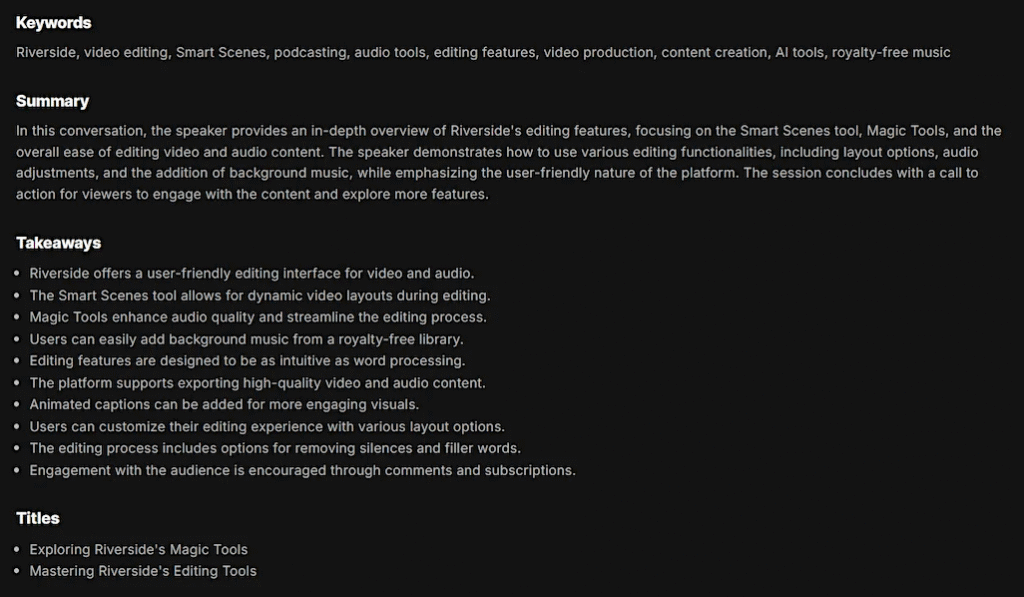
An all-in-one podcast and video studio, Riverside offers the video-to-blog post workflow, transcriptions, and AI-generated podcast summaries that can be easily repurposed. By generating high-accuracy audio and video transcripts immediately after a session, teams can use their recorded dialogue as a basis for long-form articles.
Main Features:
- Generates timestamped transcripts in over 100 languages with speaker identification.
- Transcribes audio and video recordings to text with 99% accuracy.
- AI Show Notes provides podcast summaries, takeaways, and chapters organized for your podcast website and easy repurposing.
Best for: Marketing teams and podcasters who want to streamline the path from recording to a polished written draft.
Review: “The platform is reliable, and delivers the kind of quality that makes you feel proud to hit publish.”
7. Google NotebookLM
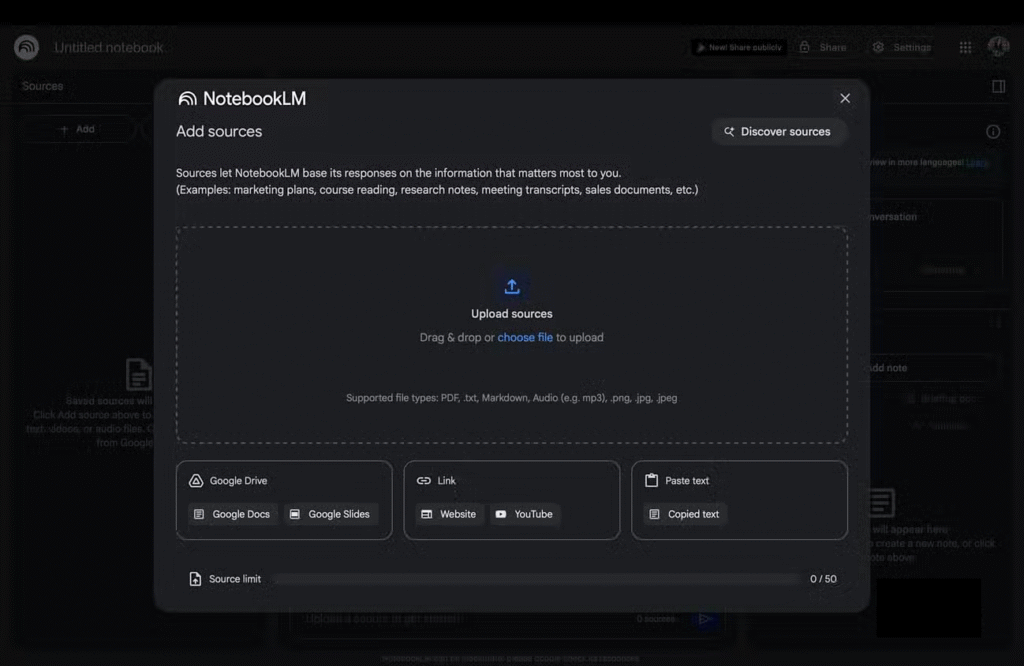
Google NotebookLM is an AI-powered research and writing assistant that uses your specific source material to ground its responses. While it has many helpful research and notetaking use cases, in terms of video-to-text, it functions as a “personalized AI” that you can feed with YouTube links or video transcripts to generate deep-dive summaries, briefing docs, and blog drafts. It is uniquely capable of connecting disparate ideas across multiple videos to create a cohesive narrative for high-level executive content.
Main Features:
- Generates content exclusively from the documents and video URLs you upload, providing inline citations so you can verify the exact source of every claim in your blog post.
- You can query it based on selected sources to create a variety of content types, including rough blog drafts and transcriptions.
- Output can be exported directly to Google Docs.
Best for: B2B writers and researchers who need to synthesize information from multiple long-form videos into a single, authoritative blog post with high factual accuracy.
Review: “It allowed me to quickly extract key insights and learn about the most relevant concepts on a topic while researching from a variety of sources (websites, white papers, video interviews).”
8. Rev
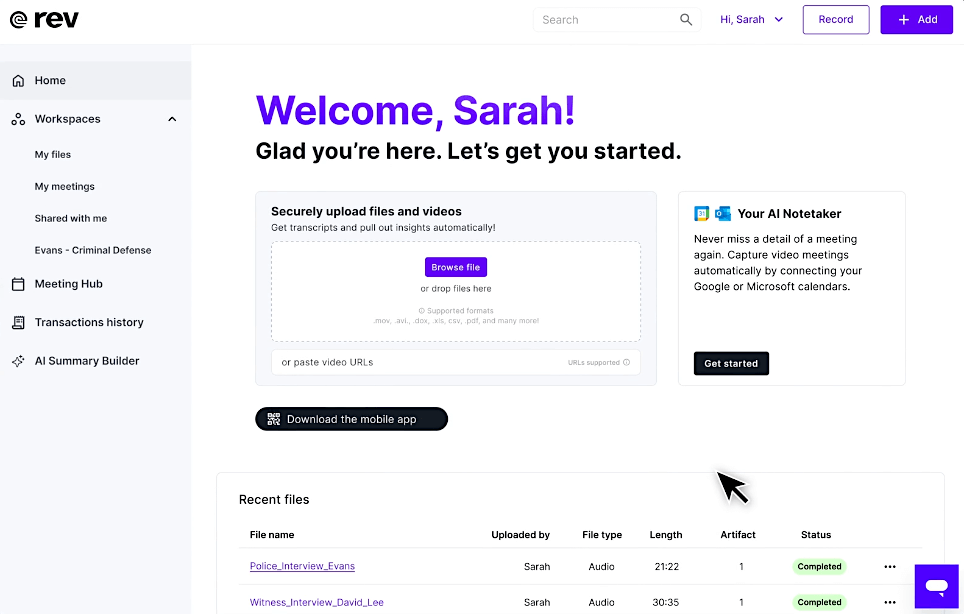
Widely recognized for its high-accuracy transcription services, Rev offers both AI-generated and human-verified text outputs. For B2B teams, it provides a precise written foundation for content repurposed from complex technical videos or multi-speaker webinars. Rev’s infrastructure is built for speed and reliability, ensuring that recorded insights are ready for editorial transformation into blog posts within hours.
Main Features:
- Provides a choice between 99% accurate human-led transcription and rapid, affordable AI-generated text.
- A specialized browser-based editor allows you to highlight key quotes and export specific text segments directly into your CMS or document.
- Professional translation services are available in over 17 languages to expand the reach of your video-based blog posts to international audiences.
Best for: Marketing teams and journalists who require near-perfect accuracy for high-level executive interviews and technical product explainers.
Review: “We generally use it to convert our video and audio files into text-based content and also add subtitles to them when needed.”
9. SummarizeBot
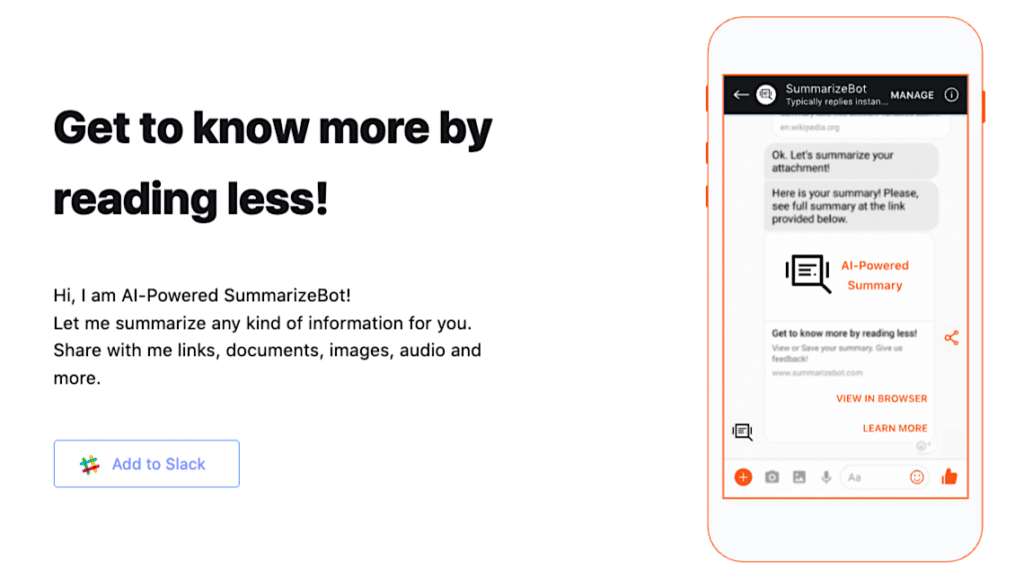
SummarizeBot is a data-driven AI platform that specializes in high-speed information extraction, and it offers automated transcription from video and audio files through a specialized chatbot. It serves as a powerful “listening” engine that uses machine learning to strip away redundant information and surface only the core narrative from a recording. You can upload the most common audio file types to the chatbot, and it automatically provides a text summary.
Main Features:
- Converts spoken dialogue from video and audio files into accurate text transcripts across more than 120 supported languages.
- Identifies and isolates the most important sentences and semantic relations within a transcript, delivering a prioritized list of text snippets to use as the “skeleton” of a blog post.
- Integrates with Slack for use by marketing teams.
Best for: Quickly extract the most relevant text data from audio files for technical articles.
Review: “It understands the mood of any text or audio information by doing analysis.”
Text-to-Blog Post Tools
10. Jasper.ai
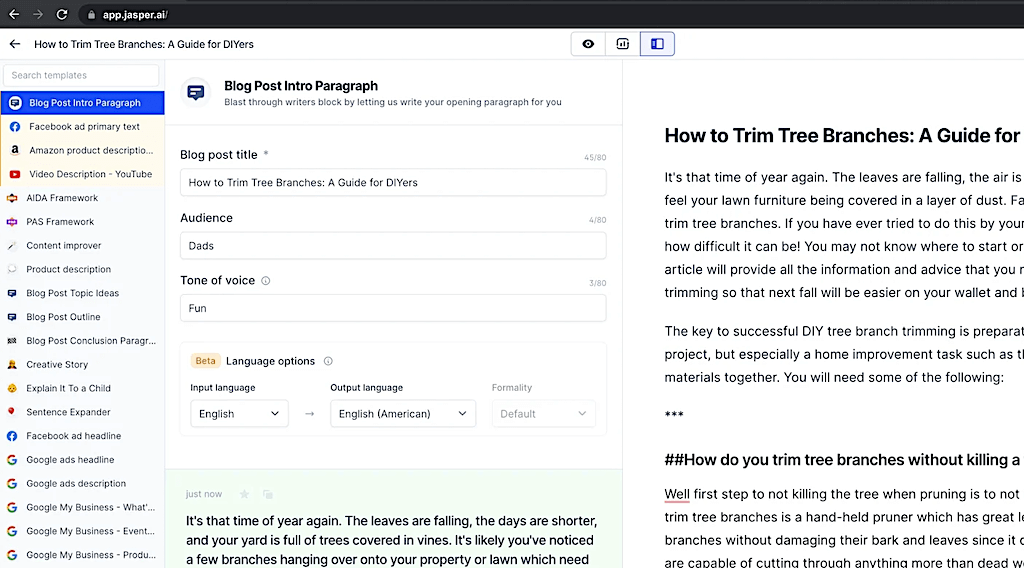
Jasper’s wide-ranging AI platform includes a dedicated content marketing hub with an enterprise-grade writing engine that specializes in scaling brand-consistent content. Within the video-to-blog workflow, it serves as a high-performance drafting layer that transforms technical transcripts into executive-level articles. Its proprietary intelligence layer, Jasper IQ, allows it to reference your specific company knowledge and product catalogs to ensure every post is factually grounded.
Main Features:
- Analyzes your existing content to mirror your brand voice and style, ensuring that repurposed video insights always sound authentic to your brand.
- Converts a single video transcript into an integrated campaign, generating synchronized blog posts, social captions, and email newsletters in a single workflow.
- Real-time SEO optimization scores and keyword suggestions are directly within the document editor.
Best for: Marketing organizations that need to maintain a sophisticated, governed brand voice while rapidly expanding their blog footprint.
Review: “I like Jasper’s AI-driven content generation because it really speeds up writing and helps maintain a consistent tone.”
11. ChatGPT
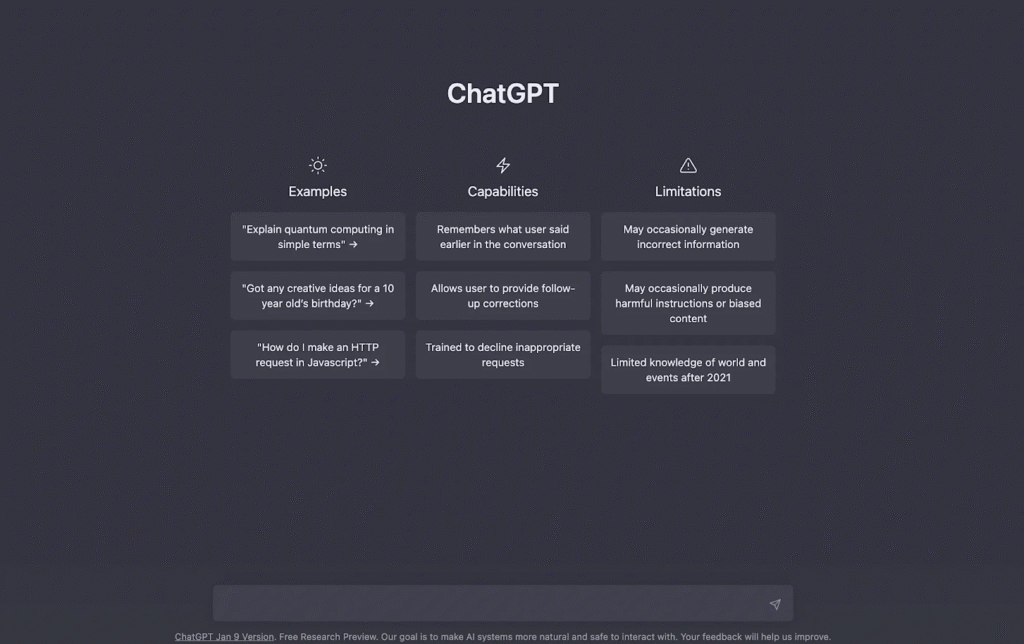
ChatGPT serves as a versatile, iterative collaborator for teams that want to co-write their blog content alongside a Generative AI assistant. Its flexibility allows it to handle transcripts of up to several hours of dialogue. It can identify key themes and synthesize them into a coherent long-form narrative. It has shifted from a simple chatbot to a document-centric editor, making it ideal for refining the nuances of a B2B blog post.
Main Features:
- Canvas interface where you and the AI can highlight text for targeted edits, adjust reading levels, or expand on specific content in real-time.
- Enables the creation of personalized GPTs pre-loaded with your SEO templates and brand guidelines for a repeatable, one-click repurposing process.
- Supports step-by-step refinement, allowing you to prompt for specific structural changes or tone adjustments.
Best for: Content strategists and growth marketers who prefer a hands-on, conversational approach to crafting deeply customized articles from video source material.
Review: “It understands context quickly, explains complex topics in simple terms, and helps turn rough ideas into clear, actionable output.”
Leverage Video Content Into Lead-generating Blog Posts
Tools to repurpose video content into blog posts turn one-off videos or weekly podcasts into evergreen lead generation assets. If you’re already producing high-value video assets that contain your brand’s best insights, repurposing that content into blog posts offers added value and opportunity to your business. However, even with AI-driven tools, operationalizing a consistent, high-quality repurposing engine requires significant time and strategic oversight. For many growth teams, engaging an agency partner can be the most effective way to integrate repurposing into a comprehensive SEO and content marketing strategy.
At mvpGrow, we understand that B2B SaaS and tech startups need content that drives revenue. As a full-service growth marketing agency, we provide end-to-end SEO and content marketing campaigns that treat your videos as pillar assets. Our expert global team handles the heavy lifting of the repurposing process, from technical SEO optimization to expert editorial refinement, to ensure your video insights are transformed into high-ranking articles that build trust and scale your pipeline.
Book a free consultation with mvpGrow today to see how we can turn your video library into a high-performance lead generation engine.

The Founder & Chief Getting Sh%T Done Officer of mvpGrow. After about 8 years as a hired hand some of the largest (and smallest) B2B SaaS companies worldwide I decided to hang up my employee slippers and lace up my growth agency cleats. But just because I’m an agency doesn’t mean we can’t chat (no charge). Please email me on any topic and I will gladly reply: eyal@mvpgrow.com